
Statistical methods for medical research — consulting, software, training
Hard questions in medical research need the right model, not a convenient one. We build the methods and the open-source software ourselves, so we can fit what your question needs, explain it, and teach it to your team.
across applied research and biostatistics methods
7 short courses, 3 schools
in R and Stata
free, in your browser
Three things, deeply
Applied biostatistics for medical research teams, the open-source software the field uses, and training courses for the next generation of biostatisticians. Same people across all three.
Applied biostatistics consultancy
Applied statistical research for medical research teams — design, analysis, and interpretation of clinical, epidemiological, and registry studies. From a thirty-minute methods conversation through to embedded leadership across a programme.
- Design and analysis of clinical, epidemiological, and real-world evidence studies
- Custom methodology for non-standard analyses
- Statistical analysis plans and pre-specified protocols
- Submission and reviewer-response support
Open-source statistical software
We build the software the field uses. The merlin family — merlin (the survival engine), morgana (Bayesian), and pendragon (multi-state) — in R and Stata, with avalon for survival-data simulation.
- merlin — the survival-regression engine
- morgana — Bayesian survival models (Stata v1 available; v2 and R in development)
- pendragon — multi-state & competing risks (R & Stata, in development)
- avalon — survival-data simulation (R & Stata, in development)
Advanced training courses
Open-enrolment short courses on flexible parametric survival, multi-state, joint modelling, longitudinal analysis, and competing risks. Bespoke in-house training for organisations standardising on the methods.
- Survival analysis · introduction and advanced
- Joint modelling of longitudinal and survival data
- Multi-state and competing risks
- RDA Winter School — annual residential programme
What our methods make possible
A few projects where the right model changed the answer — each published, peer-reviewed, and with reproducible code.
Does the procedure really improve survival — or is it patient selection?
A national study of 1.2 million Medicare patients: flexible parametric models, regression standardisation, and an instrumental-variable design showed an apparent survival benefit may be confounding rather than cause. Published in JACC.
Read the case study →Reading the whole PSA trajectory to predict survival
Joint longitudinal–survival modelling of PSA dynamics in metastatic prostate cancer — each doubling of the PSA decline rate linked to a 29% lower risk of death. Published in European Urology Oncology.
Read the case study →Mapping the path to lasting remission in lymphoma
Multi-state modelling — built on the Stata merlin and multistate packages — to estimate the real-world chance of lasting remission after diffuse large B-cell lymphoma in 2,941 Swedish patients. Published in British Journal of Cancer.
Read the case study →Counting recurrent events when death gets in the way
A new parametric model for the mean number of recurrent events — hospitalisations, infections, recurrences — over time, while correctly accounting for competing events such as death. Published in Biometrical Journal.
Read the case study →merlin — the survival-regression engine at the heart of our software
Our most-used open-source package — the engine the merlin family is built on, and the one behind much of our applied work: registry studies, peer-reviewed methods papers, and HTA submissions. In R and Stata.
The whole merlin framework, rebuilt — a C++ rewrite in R and a new release in Stata
merlin v2 for R is a ground-up C++ rewrite of the engine's survival core, with analytic gradients across every family. merlin v3 for Stata brings a rebuilt likelihood engine. Both are in build; merlin for R is available by early access on request, and the Stata package is on SSC.
Explore merlin →Interactive tools, free in your browser
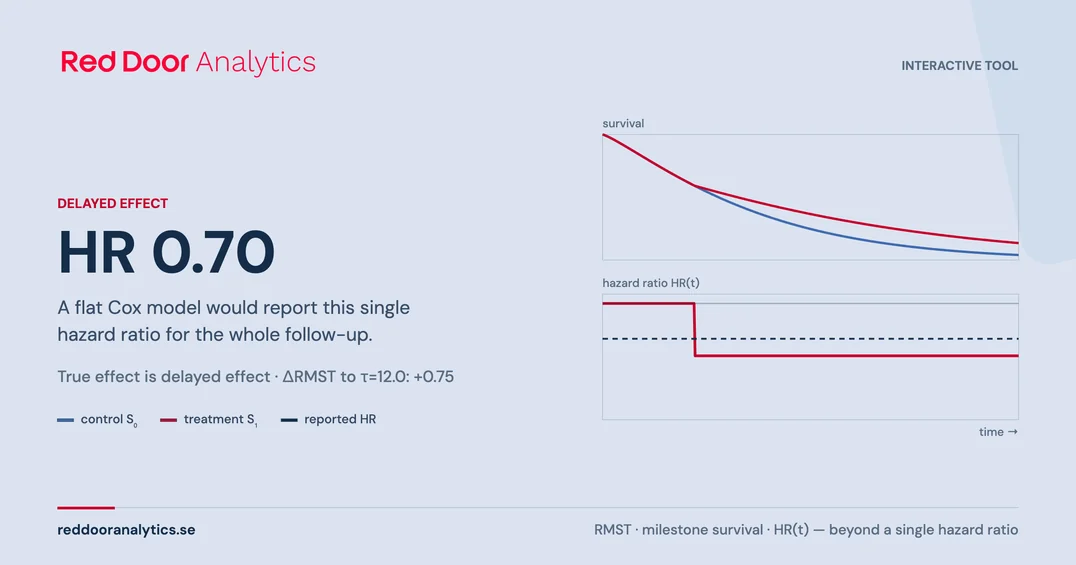
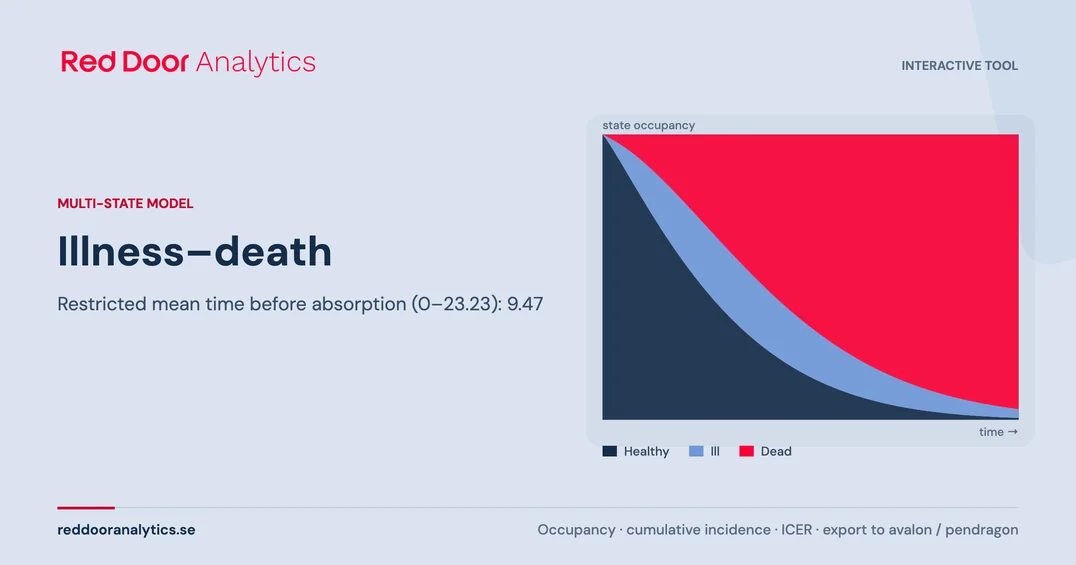
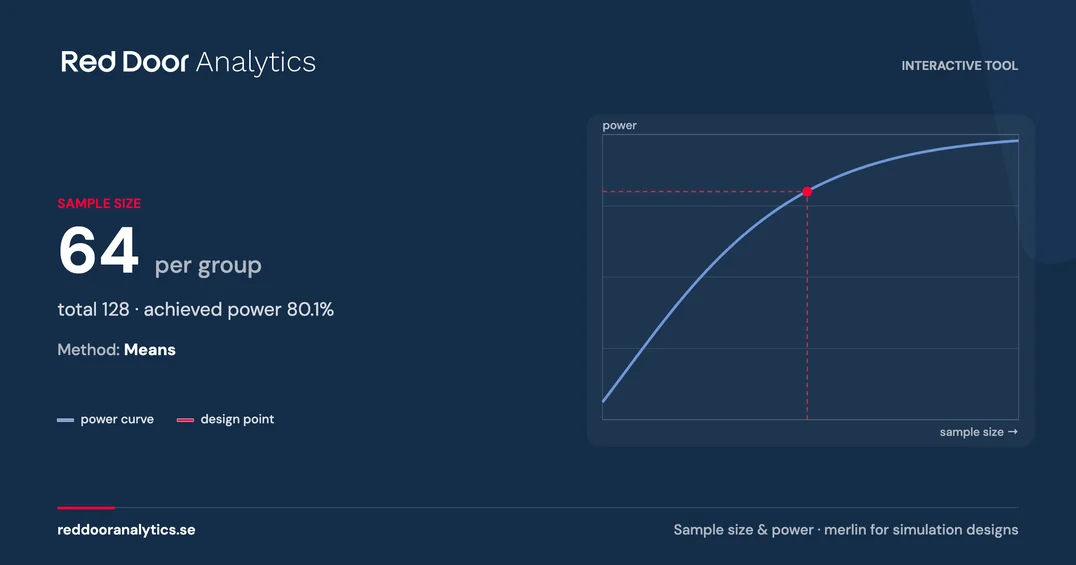
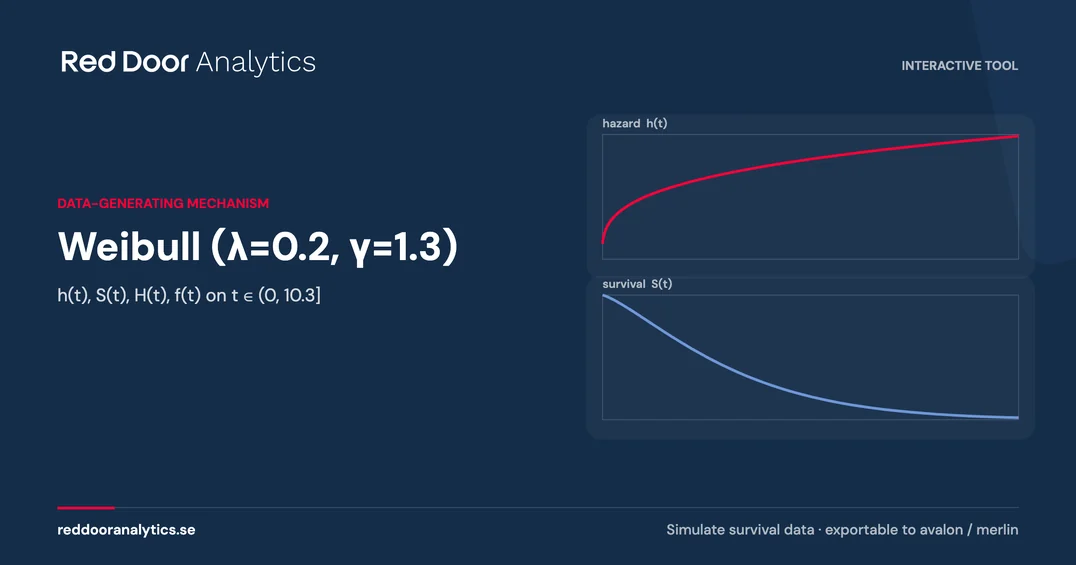
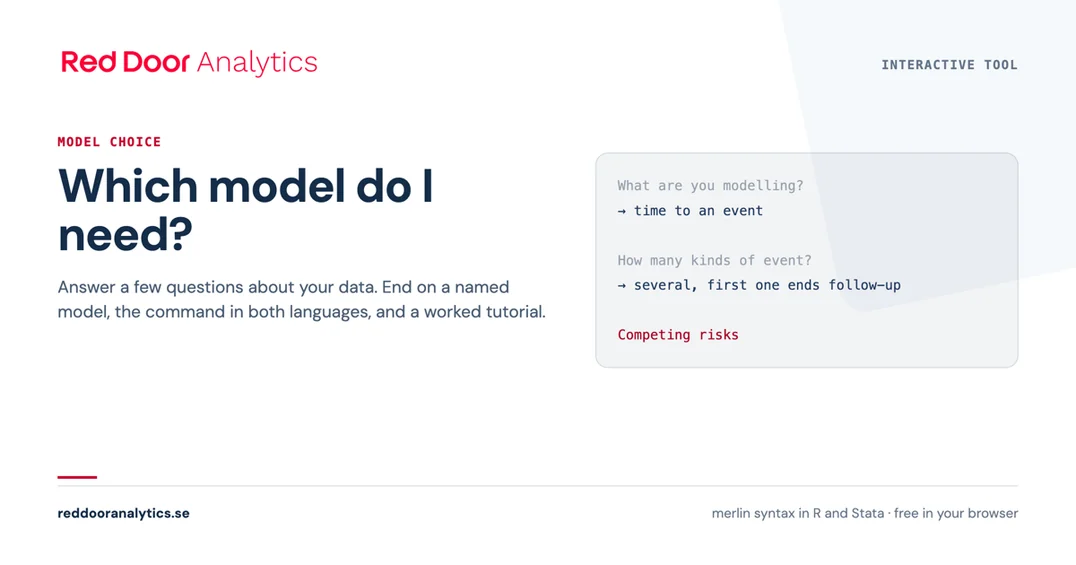
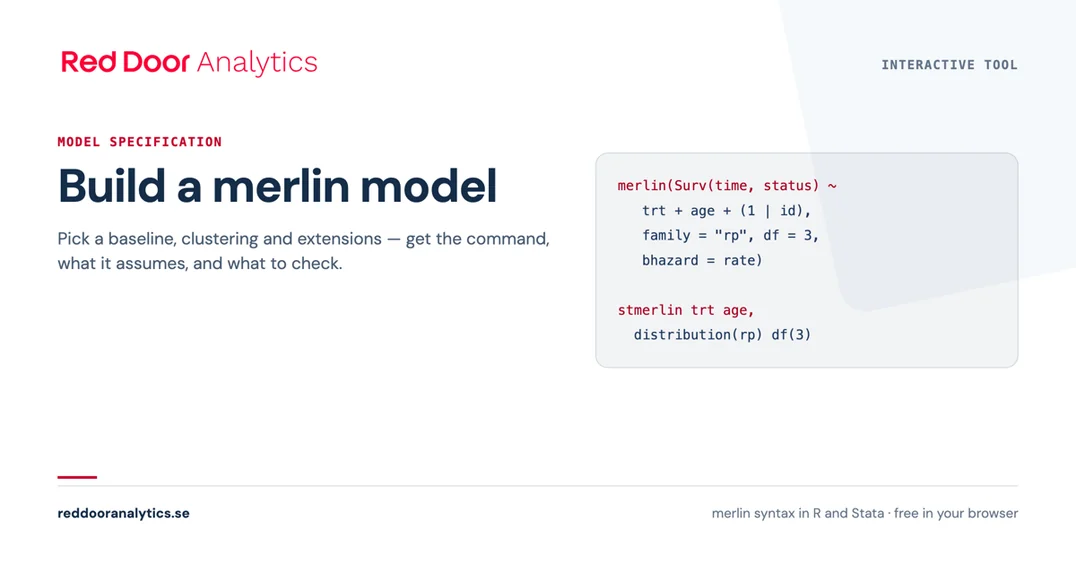
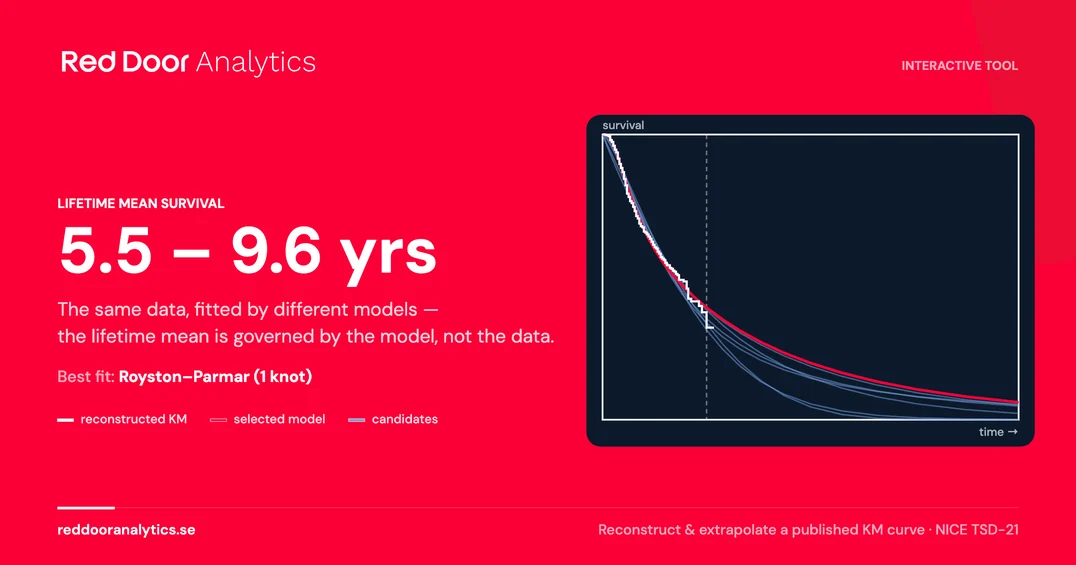
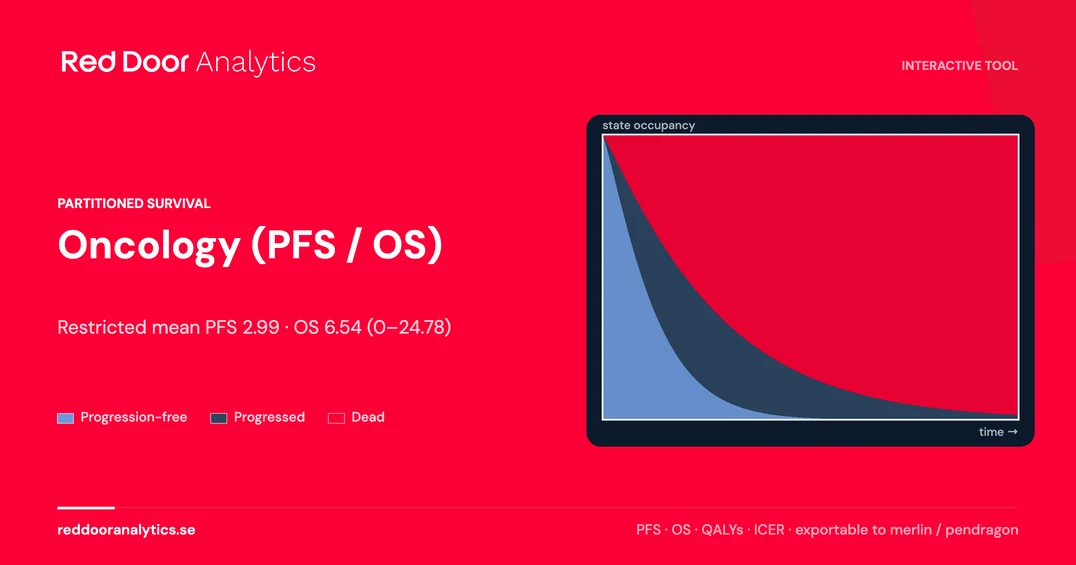
Built on the same methods we publish and teach — simulate survival data, design and power a study, see when a single hazard ratio misleads, reconstruct a published Kaplan–Meier curve, and build multi-state and partitioned-survival health-economic models. Everything runs client-side, with one-click export to R and Stata.
Advanced courses, online and in-house
A rolling programme of short courses on survival analysis, joint modelling, multi-state, longitudinal analysis, and competing risks. Register your interest and we'll let you know when the next session opens; bespoke in-house courses are scoped on request.
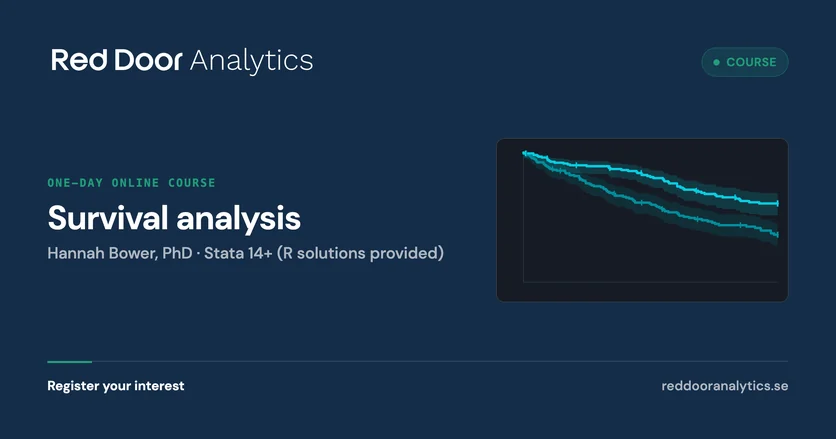
Survival analysis
Learn more →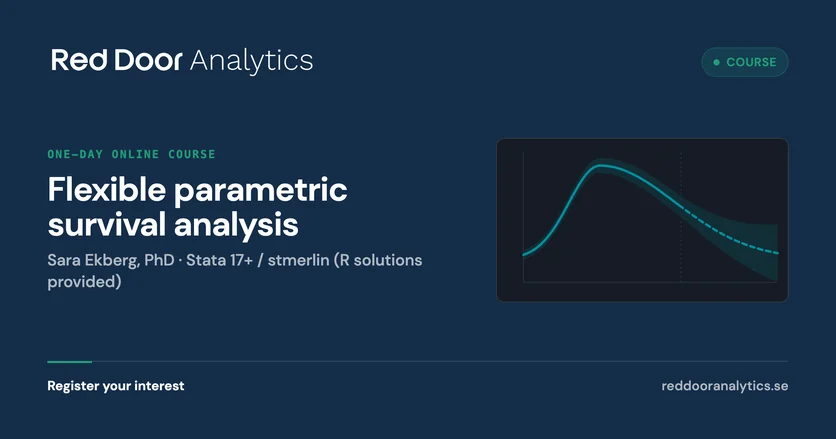
Flexible parametric survival models
Learn more →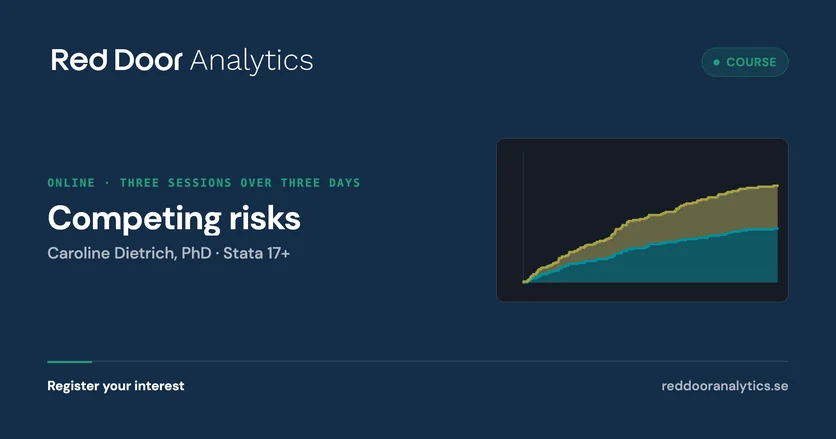
Competing risks
Learn more →It was a fantastic course that exceeded all my (high) expectations. There was a good balance between theoretical and practical content, using several applicative examples that easily connected with my current work.
The people behind the projects
A team of biostatisticians and methods researchers. Every project is staffed by a named expert; every engagement has a direct line to the team that built the methods.





What we've been working on
Publications, conference contributions, course announcements and software releases — the five most recent, newest first.
 19 Aug 2026Eight interactive tools, free and in your browser
 18 Jun 2026New publication in The Annals of Thoracic Surgery
 11 Jun 2026New publication in the Journal of the American College of Cardiology: validating CABG conduit counts
 2 Jun 2026New publication in the Journal of the American College of Cardiology
 28 May 2026Our contributions to EHA 2026 in Stockholm