
Joint modelling of longitudinal and survival data
An introduction to the concepts, methods, and software of joint models — linking repeatedly measured biomarkers with time-to-event outcomes.
What this course covers
Register interest
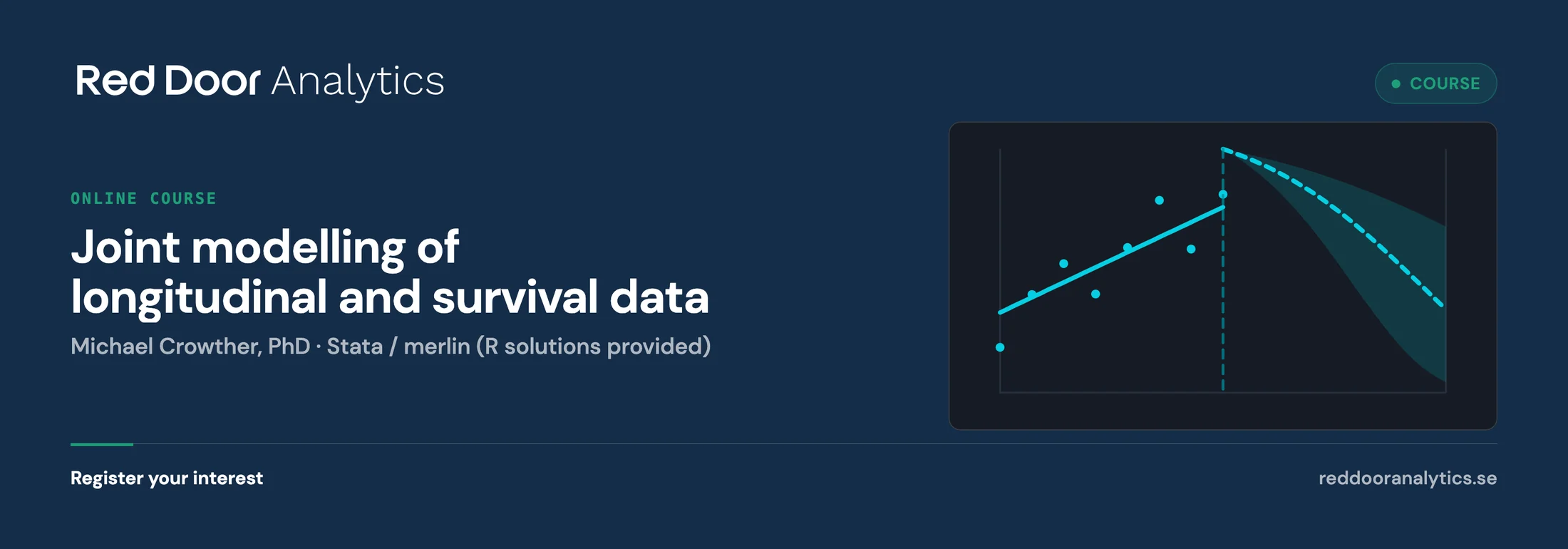
Joint models link a repeatedly measured longitudinal outcome — such as a biomarker tracked over time — with a survival outcome, through shared random effects or functions of them. They are central to modern biomarker and dynamic-prediction research.
This introductory course covers the concepts, methods, and software of joint modelling. Full course details are being finalised — register your interest to be notified when enrolment opens.
Full course title: Joint modelling of longitudinal and survival data: An introduction to concepts, methods & software
At a glance
What you'll learn
The joint framework
The methodological framework for joint models, the underlying assumptions, and estimation.
Model building
Building and evaluating a joint longitudinal-survival model.
Dynamic predictions
Dynamic predictions, and extensions such as multiple biomarkers and competing risks.
Audience & prerequisites
Who it's for
Epidemiologists, statisticians, physicians, public health specialists or anyone with an interest in advanced survival analysis.
Prerequisites
Familiarity with survival analysis and with longitudinal analysis using mixed-effects models is beneficial.